That we should become rich

In 1322 Edward II finally got his revenge. This was the aftermath of the battle of Boroughbridge (16 March) where the rebels in England were defeated.
The king’s reprisals were harsh. Thomas of Lancaster was executed - the first English earl to suffer execution since 1076 - while many other rebels were drawn and hanged in chains at York. The killings were accompanied by mass confiscations of land, which Edward used to fill his treasury. His surviving order to the treasury clerks is stark. It simply reads:
“Serve us in such a way that we should become rich.”
Prior to 1322, Edward’s military efforts had been hampered (though not prevented) by lack of cash. After Boroughbridge he was so rich that even enormous expenditures on war did not exhaust his massive reserves. Even so, the expenditure was resented because it all seemed wasted in a string of defeats and failures.
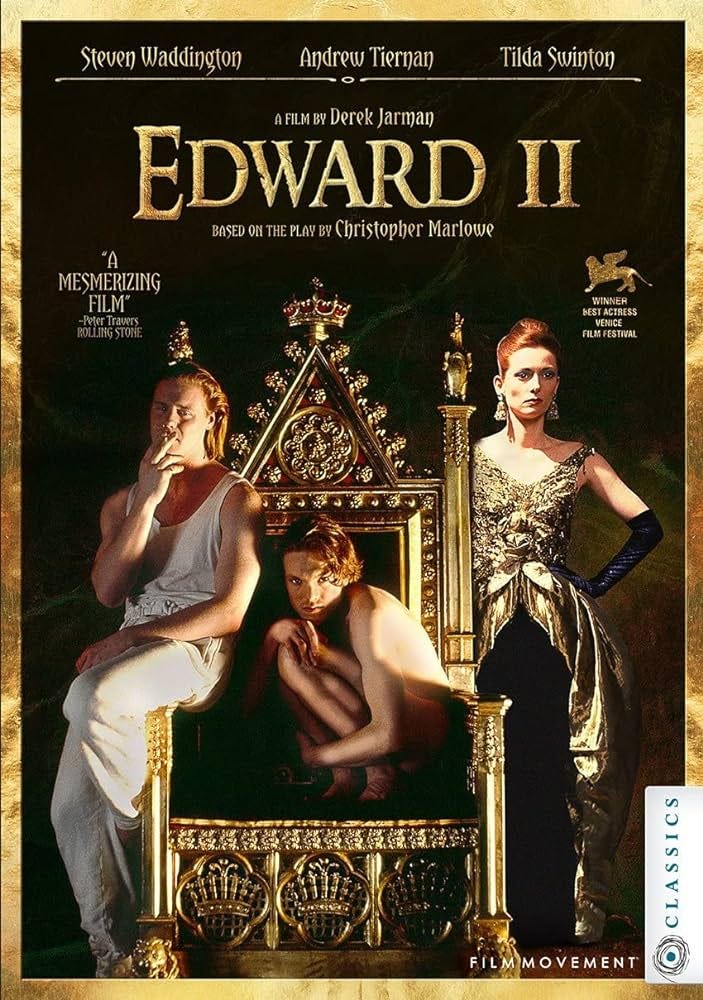
The king’s own brutality did not help. Edward II has, somehow, acquired the reputation of being one of the ‘nice’ Plantagenets; a groovy pan-sexual bohemian type, sandwiched between Stalin and Genghis Khan (Longshanks and Edward III). I can only assume this impression stems from the Derek Jarman film (see pic).
A glance at his policies quickly dispels it. In 1315 and 1316, Edward chose to impose exceptional war taxation for two years in succession. He levied this on the English population in the midst of the worst famine the country had ever known: along with disease, it may have killed up to 10 per cent of the population. The conditions in northern England, where famine and disease were accompanied by devastating Scottish raids, can only be imagined.
To judge from the Subsidy Rolls, northern England did not recover until at least 1336, and the landscape was forever altered. Peel towers were built, and in some places agriculture was abandoned. War profiteering was common, in which officers charged extortionate rents for refuge inside castles, and kept soldiers on short rations. The population was driven to make treaties with the Scots: this was technically treason, but sometimes Edward turned a blind eye. At one point, remarkably, the king himself ordered the people of Ripon to pay a ransom to recover hostages. To quote one historian:
“It is curious to see the King of England debt-collecting for his enemies and apparently indifferent to their correspondence with his subjects.”
This was the legacy of Edward I’s Scottish war, which Edward II chose to prolong while lacking the means and capacity to get any sort of result.
One reads all this in the 1320s, and thinks “So you finally decide to get fully invested in your government Edward, and this is how you go about things?!” Say what you will about his dad and son, they displayed competence throughout their reigns and to normally productive ends for at least some people beyond themselves and their favourites.
Thanks for sharing this.
I must watch the movie
Best wishes for Christmas.
LF